


Painting the Unknown: Exploring the Life and Art of Pierre-Auguste Renoir
- OldPen

- Mar 30
- 3 min read
Pierre-Auguste Renoir stands out as a key figure in the Impressionist movement, known for his vibrant colors, soft brushstrokes, and engaging depictions of daily life. His work has not only shaped the art world of the 19th century but also continues to resonate with audiences today. This exploration delves deeper into Renoir’s life, influences, and artistic legacy.
Early Life and Background
Born on February 25, 1841, in Limoges, France, Pierre-Auguste Renoir was raised in a modest household. His father was a tailor, and his mother was a seamstress. Moving to Paris in his early childhood exposed him to the rich tapestry of city life, a theme that would permeate his art. As a teenager, Renoir's passion for art blossomed. By age 13, he began working as a painter’s apprentice, honing his skills on porcelain before attending the prestigious École des Beaux-Arts.
In his youth, Renoir was influenced by renowned artists like Édouard Manet and Gustave Courbet, whose works emphasized a shift from detailed realism to depiction of light and atmosphere. This foundation paved the way for Renoir’s innovative approach to painting.
The Impressionist Movement
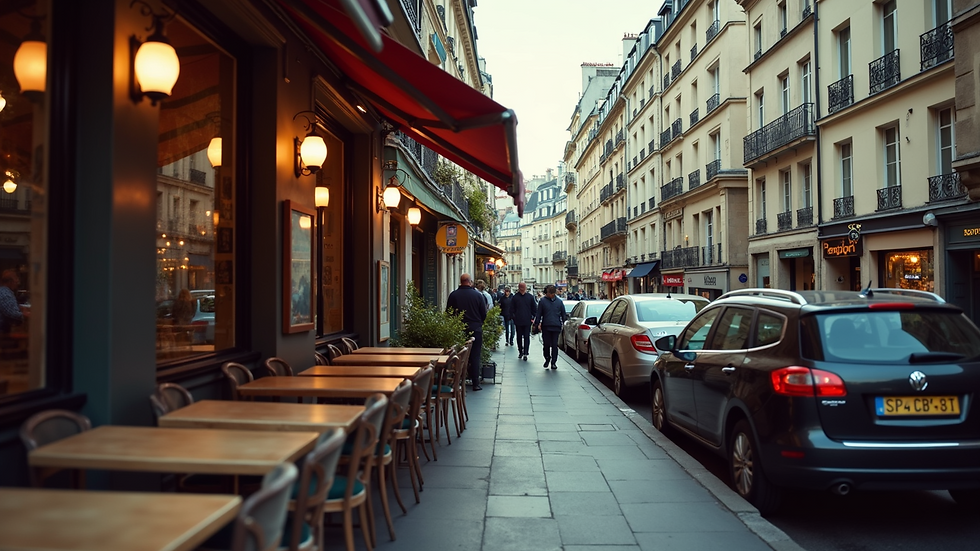
Renoir became a key player in the 1860s among a collective of artists known as the Impressionists. This group aimed to represent everyday life and the transient qualities of light. Their distinct approach was a marked departure from traditional art norms, which often focused on realism and detailed representations.
Participating in the first Impressionist exhibition in 1874 was pivotal for Renoir. His masterpiece, "Luncheon of the Boating Party," not only showcased the hallmark traits of Impressionism—such as vibrant colors and free brushwork—but also encapsulated the joyful social dynamics of the late 19th century. This painting illustrates a lively gathering of friends that evokes warmth and nostalgia.
Artistic Style and Techniques
Renoir's artistic style evolved significantly over his career. Initially favoring realism, he gradually embraced Impressionist techniques that enabled him to capture not just the forms within the scene, but also the feelings and atmosphere. His paintings are characterized by luminous color palettes, rich with light and shadow, creating vibrant imagery.
A hallmark of Renoir’s technique was his use of small, visible brushstrokes. This method not only represented the changes in light but also conveyed a sense of movement. For example, in "Dance at Le Moulin de la Galette," the interplay of light and shadow creates an atmosphere that seems to pulsate with energy, drawing the viewer into the action.

Major Works and Themes
Renoir's body of work is diverse, encompassing subjects from lively social gatherings to serene landscapes. Iconic pieces such as "Dance at Le Moulin de la Galette" (1876), which captures the vibrancy of Parisian nightlife, and "The Swing" (1876), depicting a playful moment of leisure, showcase his skill in portraying human connections.
A notable aspect of Renoir’s artistry was his ability to depict women with elegance. For instance, in "A Girl with a Watering Can" (1876), the subject is not just presented as a figure but as a representation of grace and individuality, reflecting women’s crucial roles in society.
Influence and Legacy
Renoir's influence reaches far beyond his lifetime. His pioneering techniques inspired many artists from the Post-Impressionist to the Fauvist and Modern art movements. Today, Renoir’s works feature prominently in renowned art institutions worldwide, including the Musée d'Orsay in Paris and the Metropolitan Museum of Art in New York.
Art education programs frequently highlight Renoir's impact on the Impressionist movement. His works encourage viewers to connect personal experiences and emotions to the artwork. This connection is evident in his ability to depict beauty in everyday life, inviting contemplation and enjoyment.
Personal Life and Challenges
Despite his illustrious career, Renoir faced significant personal obstacles. In his later years, he battled rheumatoid arthritis, a condition that affected his mobility and made the act of painting increasingly challenging. Nonetheless, his determination remained strong. Renoir adapted his techniques, continuing to create art that still radiated warmth and vibrancy, even as his physical condition changed.
His later works, while somewhat different stylistically, captured a profound understanding of life’s joys and challenges, resonating deeply with audiences.
Reflection on Renoir’s Impact
Pierre-Auguste Renoir’s contributions to art leave an enduring legacy. His inventive techniques, emotional depth, and vibrant compositions transformed how we view art and beauty. As we appreciate his works, we are invited to embrace the ordinary moments of life, rendered extraordinary through his brushstrokes.
Renoir's ability to capture emotion and connection within his art serves as a reminder of creativity's timeless power. It invites us into a shared experience of joy, beauty, and the simple pleasures that define our humanity. Each glance at his paintings transports us to a moment captured vividly in time, encouraging us to reflect and feel.


Comments