


Unveiling the Mystery: The Tale of the First Salmon Dance (Tsimshian)
- BLAZE

- Mar 31
- 4 min read
The Tsimshian people, indigenous to the Pacific Northwest, have a profound and respectful connection with nature, particularly with salmon. This cultural tradition shines brightly in the tale of the First Salmon Dance, a story intertwined with mythology and tradition. It provides a window into the Tsimshian’s values and their harmonious relationship with local waterways. In this post, we will explore this captivating narrative and its significance in Tsimshian culture.
The Lore of Salmon in Tsimshian Culture
In Tsimshian culture, salmon holds a sacred status, representing sustenance, life, and community. The tale of the First Salmon Dance encapsulates the respect and appreciation for this vital resource. Historically, salmon was much more than a food source; it symbolized the Tsimshian’s enduring bond with nature, which sustained them across generations.
Each year, the return of the salmon is celebrated through various rituals, with the Salmon Dance being one of the most significant. This dance not only honors the fish that nourish the Tsimshian people but also emphasizes gratitude and respect in their relationship with nature.
The Story of the First Salmon Dance
According to Tsimshian legends, the First Salmon Dance began at a time of desperation. The salmon were absent from the rivers, leading to severe food shortages and despair within the village. One night, the village chief, known for his wisdom, dreamed of a way to restore balance.
In his dream, the spirit of the salmon visited him, sharing an important message: for the Tsimshian people to receive salmon's bounty, they must first demonstrate respect and gratitude to the spirits of the water.
The following day, the chief rallied the villagers. He shared his enlightening dream and proposed a grand dance to honor the salmon, asking for everyone's participation. This display of unity was meant to offer a gesture of respect and appreciation to the spirits of nature.

The villagers responded enthusiastically. They spent countless hours preparing, painting their faces with traditional symbols and crafting dance regalia splashed with vibrant colors that mirrored nature's beauty. As drums resonated in the air and songs echoed tales of life, they eagerly prepared for the First Salmon Dance.
The Ritual Unfolds
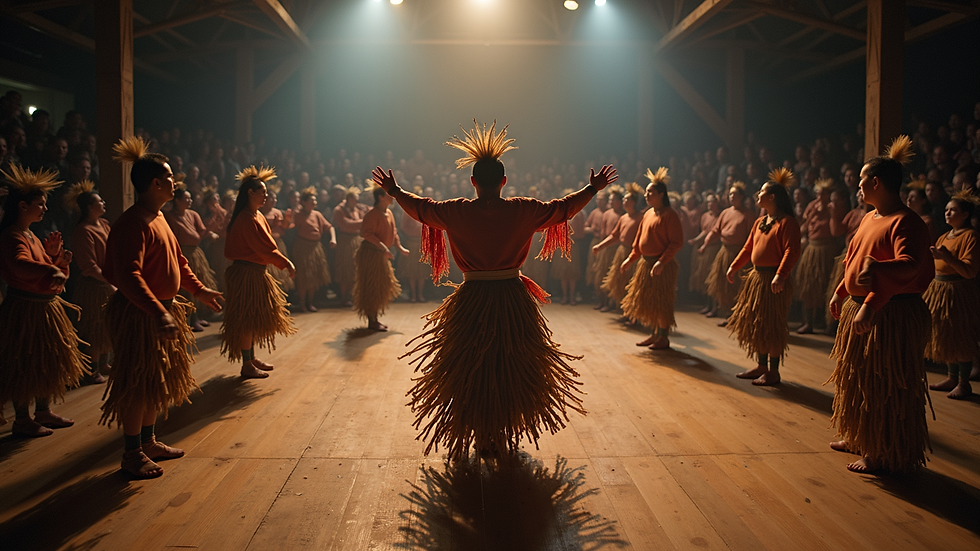
When the day of the dance arrived, the village gathered by the riverbank, enveloped by towering trees. As the sun set, villagers formed a circle, radiating purpose and anticipation. The rhythm of the drums intensified as the dancers, dressed in elaborate costumes, began to move.
While dancing, chants filled the air, invoking the spirit of the salmon. Each step functioned as a prayer, each body motion honored the waters that nurtured their lives. The performance not only served as a plea for the salmon's return but also reinforced their commitment to protecting the environment and respecting life's cycles.
As the dance reached its peak, a miraculous event occurred. Salmon began swimming upstream, joyfully leaping against the current. This sight was perceived as a divine response to the villagers’ acts of respect and gratitude. Exclamations of joy filled the air as they celebrated the fruits of their devotion.
Lessons from the First Salmon Dance
The tale of the First Salmon Dance provides valuable insights about the Tsimshian culture and the broader relationship between humanity and nature. It encompasses themes of collaboration, gratitude, and respect for the environment.
The dance serves as a powerful reminder of the importance of harmony within ecosystems and the necessity for sustainable practices. Only by respecting nature can future generations benefit from its resources.
Additionally, the story highlights the strength of community and collective action. Much like the Tsimshian villagers who united to honor the salmon, modern societies also face challenges that require collaboration and mutual respect.
The Modern Importance of the Salmon Dance
Today, the First Salmon Dance remains a fundamental part of Tsimshian culture. It is celebrated during community festivals and brings people together in a demonstration of unity and respect for the environment.
Each performance acts as a reminder of ancestral wisdom, ensuring future generations remember the essential teachings about nature and community. Furthermore, the tale of the First Salmon Dance provokes broader discussions about sustainability and environmental responsibility across various cultures.
In our contemporary context, the message of the First Salmon Dance resonates with movements advocating for ecological preservation and indigenous rights. The lessons gleaned from this narrative inspire communities worldwide to prioritize sustainability and protect natural resources.
Embracing the Spirit of the First Salmon Dance
The First Salmon Dance is a powerful story rooted in Tsimshian culture. It invites us to celebrate the connections between human beings, nature, and the spirits that inhabit our world. By honoring such narratives, we deepen our appreciation for indigenous traditions and uphold the values of respect and gratitude that echo across cultures.
As this tale continues to be shared, it teaches us that to flourish, we must unite, value our environment, and express gratitude for the sustenance we receive. Through these actions, we honor the legacy of the Tsimshian and cultivate a future that respects all living beings.


Comments